
Children whose mother tongue is different from the language of instruction in Czech schools must navigate numerous obstacles in the education system, the most challenging one being the language barrier, limited access to language training and support, and their low availability. Not everyone who really needs support receives it, and even if they do, the support is not sufficient or systematic. While it is missing at all levels of education, Czech citizens and the youngest children in kindergartens are especially disadvantaged, as they are groundlessly excluded from access to language training. The issue is that schools are still not ready to teach multilingual kids. Children and young people with immigration experience often face psychosocial difficulties and feel alienated, rejected, and excluded. The needs of teachers who teach these students are also neglected. In some areas, schools are at their full capacity, which means more children are missing out on education, and segregated classes or schools emerge.
One of the major challenges for students with other mother tongues is the transition between different levels of education. There is a yawning gap between elementary and high school, where the language barrier, unfamiliarity with the local education system, and the lack of systematic language, social, career, and psychosocial support often result in school failure, loss of motivation, and premature termination of education. The most vulnerable group are young people who come to the Czech Republic just before or shortly after completing compulsory education. Therefore, our advocacy work focuses primarily on this target group, the goal being to ensure that young people for whom Czech is not their first language have equitable opportunities to successfully integrate into the education system, the labor market, and society.
Lack of language training before entering high school is the main challenge which prevents young people with immigration experience from successfully becoming part of the education system. Our goal is:

The admission procedure and the state part of the maturita school-leaving exam must be designed to reflect the aptitude for studying, talent, motivation, and learning abilities of all applicants and students, regardless of their language proficiency and the specific situation of multilingual students. We have joined the efforts to introduce a general reform of entrance and school-leaving exams in secondary education to make sure the principle of equitable opportunities is respected. Our specific goal for applicants and students who face systemic obstacles due to the language barrier is:
Our activities focus on systemic changes that will assist children and young people hindered by the language barrier and help improve the entire education system. Below is a selection of our latest advocacy activities:
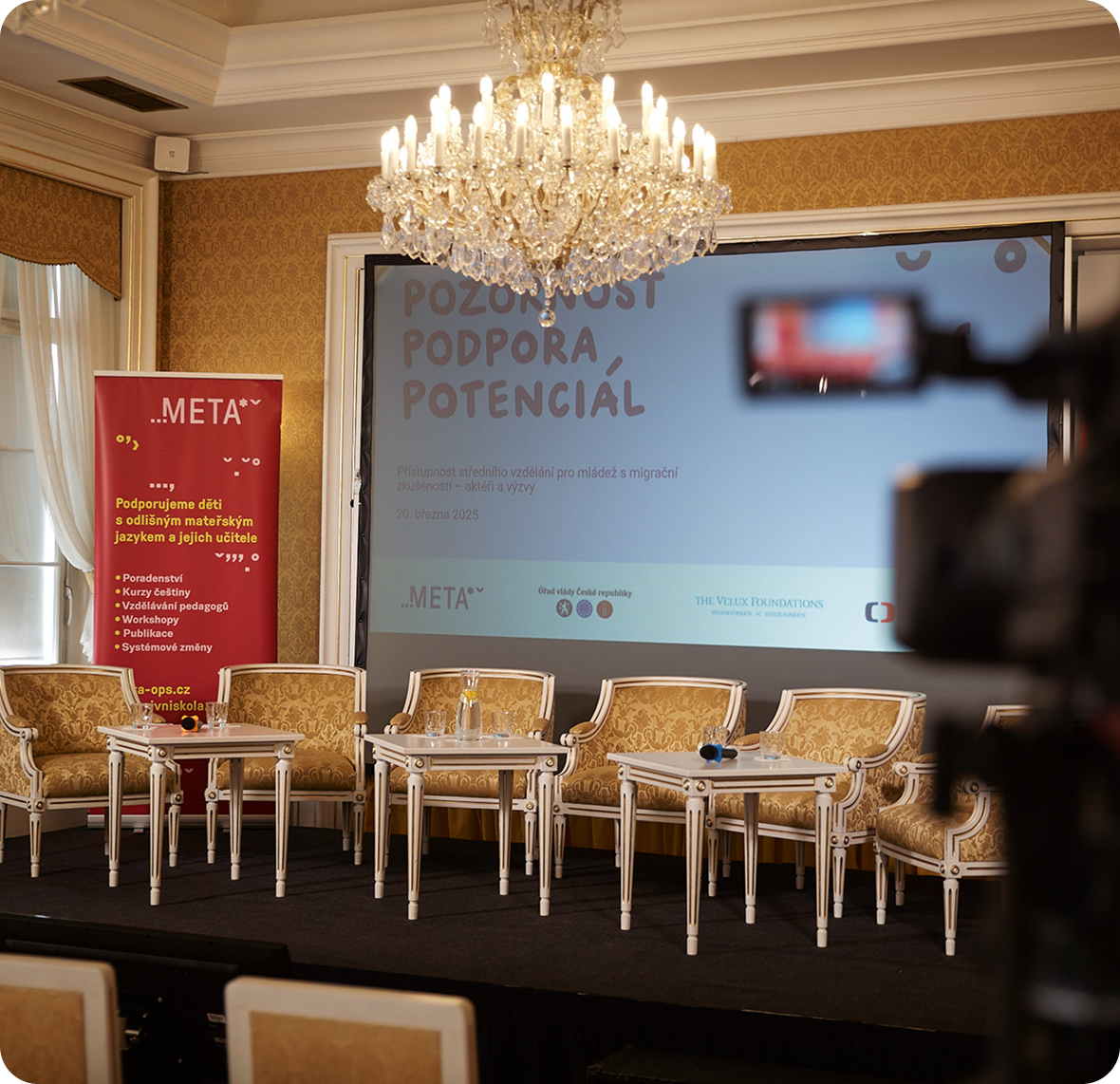
We organize meetings on specific topics, such as conferences, round tables, panel discussions, etc. The target audience is the professionals in the field as well as anyone from the general public interested in the education and inclusion of multilingual children.